The Spark journal · Learning Through Play
How preschoolers actually learn gratitude (hint: it's not a forced thank-you).
Gratitude is a complex social-emotional skill that grows through concrete noticing, shared warmth, and playful routines—especially around busy holiday tables.

Picture a bustling Thanksgiving dining room. Eleven relatives are passing warm serving dishes of potatoes, green beans, and roasted turkey. An aunt reaches across the table to hand a warm yeast roll to a four-year-old. Before the child can even reach for the butter, a parent whispers urgently: "What do you say?"
The child freezes. They stare down at the tablecloth, look to the side, or sink silently back into their chair. The adult feels a twinge of embarrassment; the child feels suddenly evaluated in front of an audience.
That scene is an illustrative example rather than a story about an individual student, and it captures a tension almost every parent experiences in November. Adults understand gratitude as a moral virtue, a social courtesy, and a heartfelt appreciation for generosity. But to a three-, four-, or five-year-old, gratitude is not a single reflex or a polite script. It is an intricate, multi-layered social-emotional capacity that their developing brain is just beginning to construct.
Demanding an instant verbal recitation under pressure turns what could be a moment of genuine warmth into a compliance drill. When we understand how young children actually process thankfulness, we can trade stressful etiquette tests for joyful, concrete routines that help empathy take root naturally.
Why gratitude looks different at ages 3 to 5.
Preschoolers view the world through concrete, firsthand experiences. In cognitive developmental psychology, children between ages two and six are in what Jean Piaget described as the preoperational stage. Their thinking is centered around what they can immediately see, touch, taste, and feel.
Expecting a four-year-old to ponder abstract blessings—like good health, family heritage, or ancestral traditions—asks them to perform mental gymnastics their brain simply cannot yet execute. When an adult asks a three-year-old what they are thankful for and the child enthusiastically shouts, "My light-up sneakers!" or "Macaroni!", that is not superficial or ungrateful. That is developmental precision. Young children anchor appreciation in things that bring them tangible delight and security.
Furthermore, authentic gratitude requires perspective-taking: recognizing that someone else expended time, thought, or energy on your behalf. As the Head Start Early Learning Outcomes Framework (ELOF) notes, empathy and prosocial behaviors develop gradually across the preschool years through repeated, responsive interactions with caring adults. A young child cannot instantly guess what an aunt gave up to travel across three states, but they can easily recognize that she brought a puzzle and sat on the rug to play.
When we meet preschoolers where they are developmentally, gratitude transforms from a chore into a shared discovery.
The four parts of real thankfulness (Notice, Think, Feel, Do).
In groundbreaking developmental research led by Dr. Andrea Hussong and her team at the University of North Carolina at Chapel Hill through the Raising Grateful Children Project, researchers identified that gratitude in childhood is not just saying "thank you." Instead, genuine thankfulness involves four interconnected experiences that adults can nurture and scaffold:
- Notice (Awareness): What did someone do, give, or share? For a preschooler, noticing starts with concrete observation.
- Think (Meaning & Intention): Why did they do it? Did they think about what you like?
- Feel (Emotion): What does that kindness feel like inside? A warm chest, a happy smile, or a feeling of being safe and cared for.
- Do (Action): What can we do to express that appreciation outward?
Consider what happens when you narrate this sequence in an ordinary moment:
Suppose your four-year-old is watching you prepare holiday sweet potatoes in the kitchen, and Grandma brings over a bowl of mini marshmallows:
- Notice: "Look, Grandma brought over a fresh bowl of marshmallows for our sweet potatoes."
- Think: "I wonder why Grandma remembered the marshmallows? She knows how much you love sprinkling them on top."
- Feel: "Doesn't it feel warm and special when someone remembers what makes you smile?"
- Do: "Would you like to give Grandma a high-five, or show her where you sprinkle them?"
That short, connected exchange does ten times more developmental work than shouting "What do you say to Grandma?" from across the island. The child connects an adult's generous intent with their own internal feeling of warmth, and they are given an authentic, child-sized way to respond.
Five low-pressure Thanksgiving gratitude activities for preschoolers.
You do not need complicated Pinterest crafts, hot glue guns, or expensive supplies to cultivate thankfulness. In purposeful play, the richest learning happens through simple, hands-on materials and unhurried connection. Here are five low-pressure activities tailored for ages 3 to 5:
1. The "Notice & Wonder" Table Hunt
Large family dinners can make young children shy or overwhelmed. Instead of going around the table asking each person for a formal speech, turn gratitude into a low-stakes observation game:
- "Can you find someone wearing your favorite color?"
- "Who can spot something on this table that smelled delicious while it was baking?"
- "Let's look around: who helped carry the plates to the table today?"
This playful approach invites children to observe acts of care without feeling put on display.
2. A Sensory Gratitude Nature Walk
Preschoolers have large energy reserves, and waiting for a turkey to roast can test everyone’s patience. Step outside for a 15-minute gratitude walk around the neighborhood or yard.
Hand your child a small basket or paper bag. Invite them to look for three small treasures they are glad exist: a crunchy golden leaf, a smooth acorn, or a feather. When you return home, place their finds in a small dish in the center of the table. Your child will proudly announce to guests: "I found the red leaf under the maple tree!" Connecting thankfulness to the natural world grounds their appreciation in physical reality.
3. Real Kitchen Jobs with Real Purpose
In guidance on healthy holiday habits, the American Academy of Pediatrics (AAP) on HealthyChildren.org recommends inviting young children directly into meal preparation. Real contribution builds a child's sense of belonging and helps them appreciate the effort behind family celebrations.
Preschoolers can do genuine work:
- Tearing lettuce or spinach leaves for a fresh salad
- Washing potatoes in a cool basin of water with a vegetable brush
- Shaking cinnamon and nutmeg into cranberry sauce
- Folding cloth napkins into simple "tent" shapes and placing one at every seat
When a child has hand-washed the potatoes, they sit down at the dinner table with genuine pride. As we discuss in what children learn beyond the finished project, the value is in the active process of participating alongside the family.
4. Child-Dictated Thank-You Postcards
Drawing and mark-making give preschoolers a voice before they can write words. Fold a few pieces of cardstock or blank paper in half. Set out chunky crayons, washable markers, or watercolor paint sticks.
Invite your child to draw something for a relative, neighbor, or teacher. When they finish, ask: "Tell me about what you made, and what you want them to know." Write down their exact words at the bottom:
"Lilly drew five green circles. She says: 'Thank you for reading the train book with me on the rug.'"
Your child sees that their thoughts hold value, and the recipient receives a keepsake far more touching than a generic greeting card.
5. The Coziest-Moment Bedtime Check-In
Thanksgiving Day is loud, stimulating, and often disrupts normal nap and meal routines. By bedtime, a preschooler's nervous system is tired.
Instead of asking broad questions, cuddle up quietly in the dim room and ask two simple prompts:
- "What was the coziest or most fun part of your day?"
- "Was anything too loud, tricky, or overwhelming?"
Validating both the sweet parts and the hard parts shows children that gratitude does not require pretending everything was perfect. It simply means noticing the good moments even amidst a busy day.
Navigating table waits, holiday travel, and sensory overload.
It is developmentally unrealistic to expect a three- or four-year-old to sit quietly in an adult dining chair for an hour-and-a-half while adults linger over pie and coffee. When a child begins squirming, tapping silverware, or whining, their behavior is communication—signaling that their sensory thresholds and self-regulation capacities have been reached.
Supporting your preschooler during holiday gatherings means planning for their developmental needs:
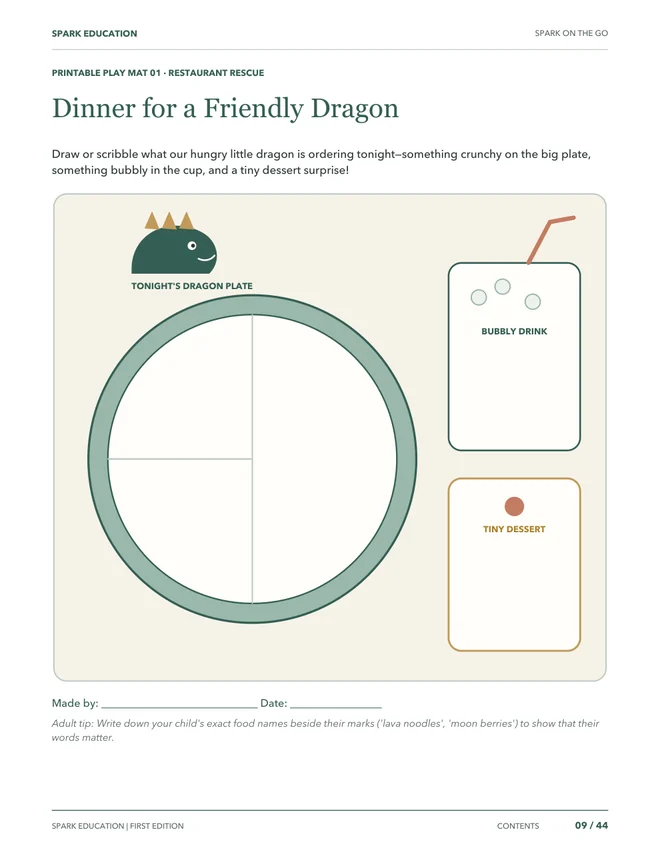
- Pack zero-prep screen-free activities: Before you leave for Grandma’s house, an airport wait, or a restaurant dinner, have a small pouch of lightweight play materials ready. Interactive table mats, visual search games, and simple storytelling prompts keep small hands occupied without relying on glowing screens.
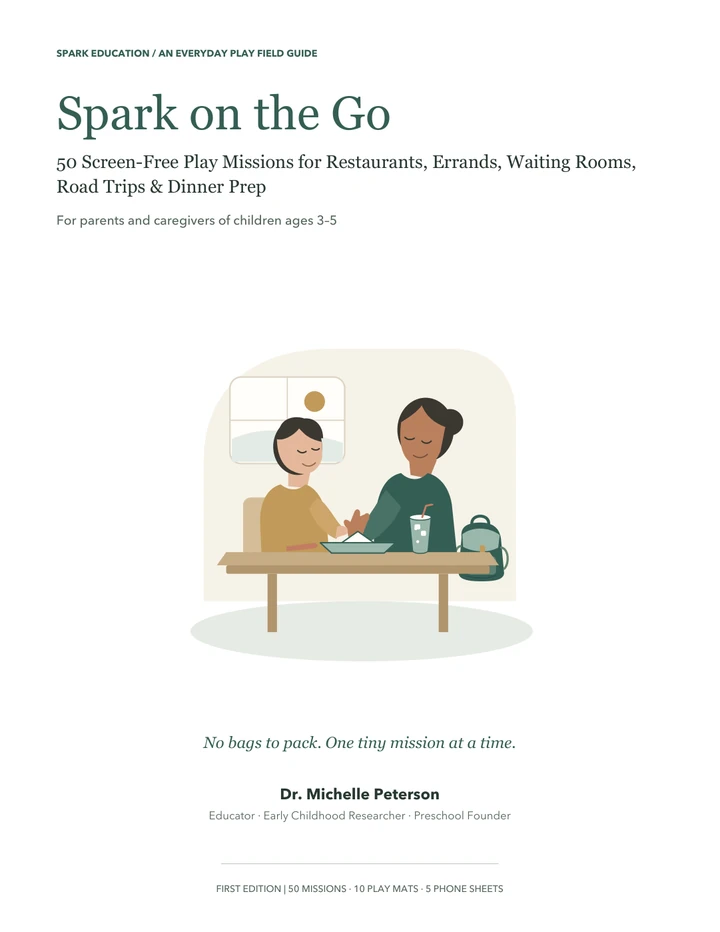
- Download our free travel companion: Grab our free Spark on the Go Starter Pack — PDF, 10 pages, which includes five zero-prep play missions, two tabletop activity mats, and a phone quick-sheet designed for table waits, long car rides, and cooking dinner.
- Have gentle language ready for tricky transitions: When holiday travel, skipped naps, or competing for a cousin's toy causes tears, having calm words ready makes all the difference. Explore our Preschool Parenting Scripts ($4.95, 20 pages) for practical language that holds limits while preserving connection during big feelings and rushed holiday moments.
- Explore screen-free play for winter days: For families looking ahead to long winter afternoons after Thanksgiving, explore 365 Invitations to Play ($14.95, 429 pages) or browse our Preschool Holiday Gift Guide for open-ended toys that keep children engaged without playroom clutter. You can also find all five guides in the complete Preschool Play & Readiness Collection ($24.95, saving $23.80).
Questions families ask about Thanksgiving gratitude.
What if my child refuses to say "thank you" when a relative hands them a gift or food?
Step in with warmth and handle the social moment on your child's behalf: "We are so glad Aunt Sarah could visit us today. Lilly is feeling a little shy right now, but she is so excited to read that story together." Later, when the pressure is off, you can offer a gentle, low-stakes way to connect: "Would you like to give Aunt Sarah a wave or show her the tower you built before she leaves?" Shaming or scolding a child in front of relatives only increases social anxiety.
Is my preschooler ungrateful if they only say they are thankful for "hot dogs" or "Batman"?
Not at all. Concrete and playful answers are completely normal and developmentally appropriate for three-, four-, and five-year-olds. Hot dogs and superheroes represent real comfort, delight, and imaginative joy in their daily life. Laugh warmly and validate their honesty: "Hot dogs are delicious! What do you like best about them?" Trying to force an abstract answer like "peace and good health" teaches children to perform rather than speak authentically.
How can we manage holiday dinner when a preschooler gets restless after 15 minutes?
Plan an "exit lane" in advance. Let your child know before sitting down: "We will all enjoy dinner together for a little while, and when your tummy is full and your body needs to move, you can carry your plate to the sink and play with your drawing mat in the living room." Setting up a quiet, inviting corner with blocks or books allows adults to converse while honoring the child's physiological need for movement.
How can we handle family members who insist on strict, old-fashioned table manners?
Have a brief, proactive conversation before Thanksgiving dinner: "Sam is four and so excited to see everyone. He loves being part of our meal, but after twenty minutes of sitting his body will need to move around. We’ve packed a quiet puzzle rug in the next room so he can play happily while we enjoy our conversation." Framing the plan around your child's success prevents awkward misunderstandings at the table.
See purposeful play in person.
At Spark Academy in Morton, Illinois, our classrooms and monthly-rotating Developmental Playroom are intentionally designed to foster empathy, communication, and joyful curiosity every day. Local Central Illinois families are always welcome to schedule a personal tour to see how purposeful play supports children through every season of growth.
The Spark Journal · Email Updates
Never miss a new Spark Journal article.
Get a short, thoughtful note from Dr. Michelle Peterson on Tuesdays and Fridays when new articles go live—practical ideas for the preschool years, straight to your inbox.
Free 10-Page Starter · Families Everywhere
Turn everyday errands and waits into screen-free play.
Spark on the Go packs 50 zero-prep play missions, 10 interactive mats, and 5 phone quick-sheets for restaurants, grocery aisles, waiting rooms, car rides, and cooking dinner. Download the 10-page starter PDF free.
Dr. Peterson’s complete PDF library · Paid PDF downloads you can read on screen or print selected pages: