
Skip to content

A guide to ages, rhythms and next steps

When to start preschool

Find a starting point that fits your child’s age, growing independence and everyday rhythm.

Make room for a good beginning.

Preschool offers time for friendships, conversation, curiosity and learning to be part of a group. The right starting point includes both your child’s development and the support a school can offer.

You do not have to make that decision from a birthday alone.

Notice how they join a day.

Think about communication, time with other children, bathroom routines and comfort with a trusted caregiver. Use the signs below to start a conversation, not to score readiness.

Six signs to discuss
  • Can handle a 2- to 3-hour morning without a nap
  • Can communicate basic needs, even imperfectly
  • Shows interest in other children — even parallel play counts
  • Is potty trained or very close to it
  • Can separate from a parent with manageable distress — not zero distress, just recoverable
  • Can follow simple two-step directions

At Spark, all core programs require children to be fully potty trained before starting.

Explore the full readiness checklist →

Find the age and rhythm that fit.

These are Spark’s starting points. Visit each program for its full schedule, tuition and enrollment details.

Age 3

First friendships.
Familiar routines.

Fresh 3’s Fridays offers a full preschool morning once a week, with rolling enrollment when your child turns three and no deadline.

3’s Preschool meets Monday/Wednesday or Tuesday/Thursday, 8:30–11:30 AM. Both programs share the curriculum, teachers and daily rhythm.
Age 4

More ideas.
More ways to explore.

4’s Preschool offers two, three or five mornings per week. Your child must be four by their first day.

Choose a rhythm that works for their energy, growing friendships and your family’s week.

Compare schedule options →
Age 5

A thoughtful next step.

Kindergarten Prep welcomes children who turn five by November 30, with two-, three- or five-day schedules.

Spark’s Kindergarten requires age five by September 30 and meets Monday–Friday, 8:00 AM–noon.

How do public-school cutoffs compare?

Illinois generally uses September 1 for public kindergarten. Early entrance requires a district readiness assessment. Check with your receiving district about its process and future placement; Spark’s program cutoffs are separate.

Plan from where your child is now.

If you are unsure about separation, communication or the morning routine, bring those questions to a tour. Talk with your pediatrician about developmental concerns.

Reading, playing and spending time with other children can remain part of your family’s day while you consider the next step.

More about readiness at three →

One year or two?

Plan for the child in front of you. Consider the quality of the experience, the available support and your family’s circumstances.

Ask an educator what your child could work on in the coming year and how that connects with the transition to kindergarten.

Questions families ask.

What age do most children start preschool?

Many families consider preschool around age three or four. Starting ages and schedules vary by program. At Spark Academy, core programs begin at age three; a tour is a chance to discuss your child’s skills, interests and daily routine.

Does my child need to be potty trained to start preschool?

Most preschool programs for children age 3 and older require potty training. “Potty trained” generally means the child can communicate the need and manage it with minimal assistance — occasional accidents are expected and normal. At Spark Academy, potty training is required for all core programs.

Is 2 too young for preschool?

The right fit depends on the child and on how a program is designed. Some programs welcome two-year-olds with age-appropriate routines and support. Spark’s core preschool programs begin at age three. Ask any school about its age requirements, group size and approach to care and learning.

Should I delay kindergarten if my child has a late birthday?

Discuss your child’s development, the available programs and entry requirements with their teacher and the receiving school. Illinois generally uses a September 1 cutoff for public kindergarten; districts assess early-entry requests under their own procedures. Spark’s Kindergarten Prep is available to children who turn five by November 30.

Can my child start preschool mid-year?

Fresh 3’s Fridays has rolling enrollment when your child turns three, with no fall deadline. It is a complete weekly preschool program. Contact Spark about availability and the starting date that fits your family.

Is one year of preschool enough before kindergarten?

There is no single number of preschool years that determines readiness for every child. Consider your child’s development, the learning environment and your family’s circumstances. An educator can help you plan a useful year ahead, whether it is your child’s first preschool year or their second.

Come talk it through.

See the classroom and explore the options with people who know this age well.

A little guidance for the first big step.

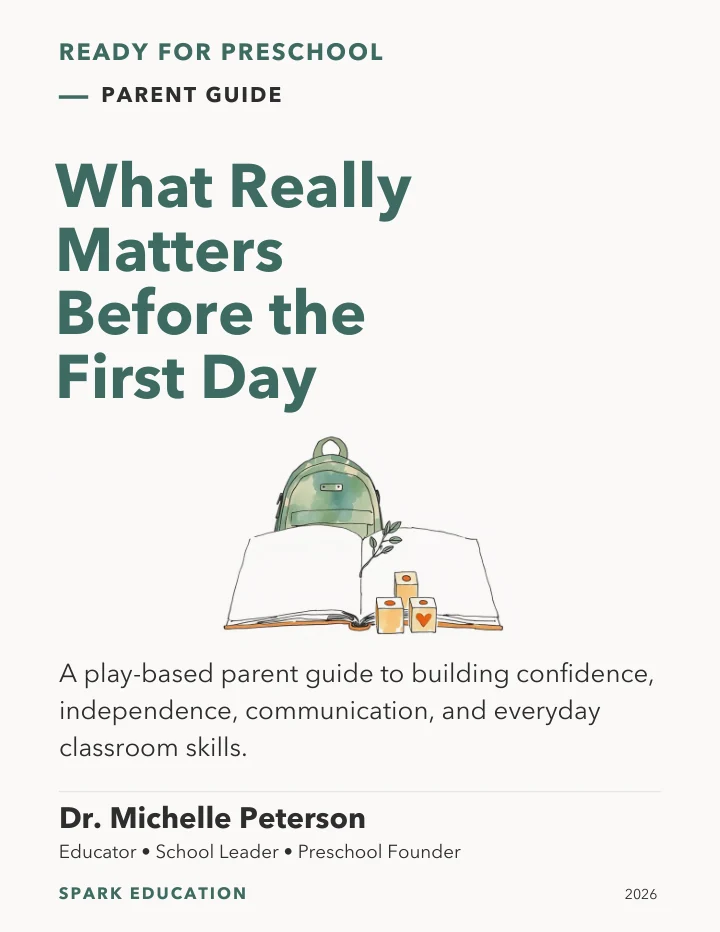
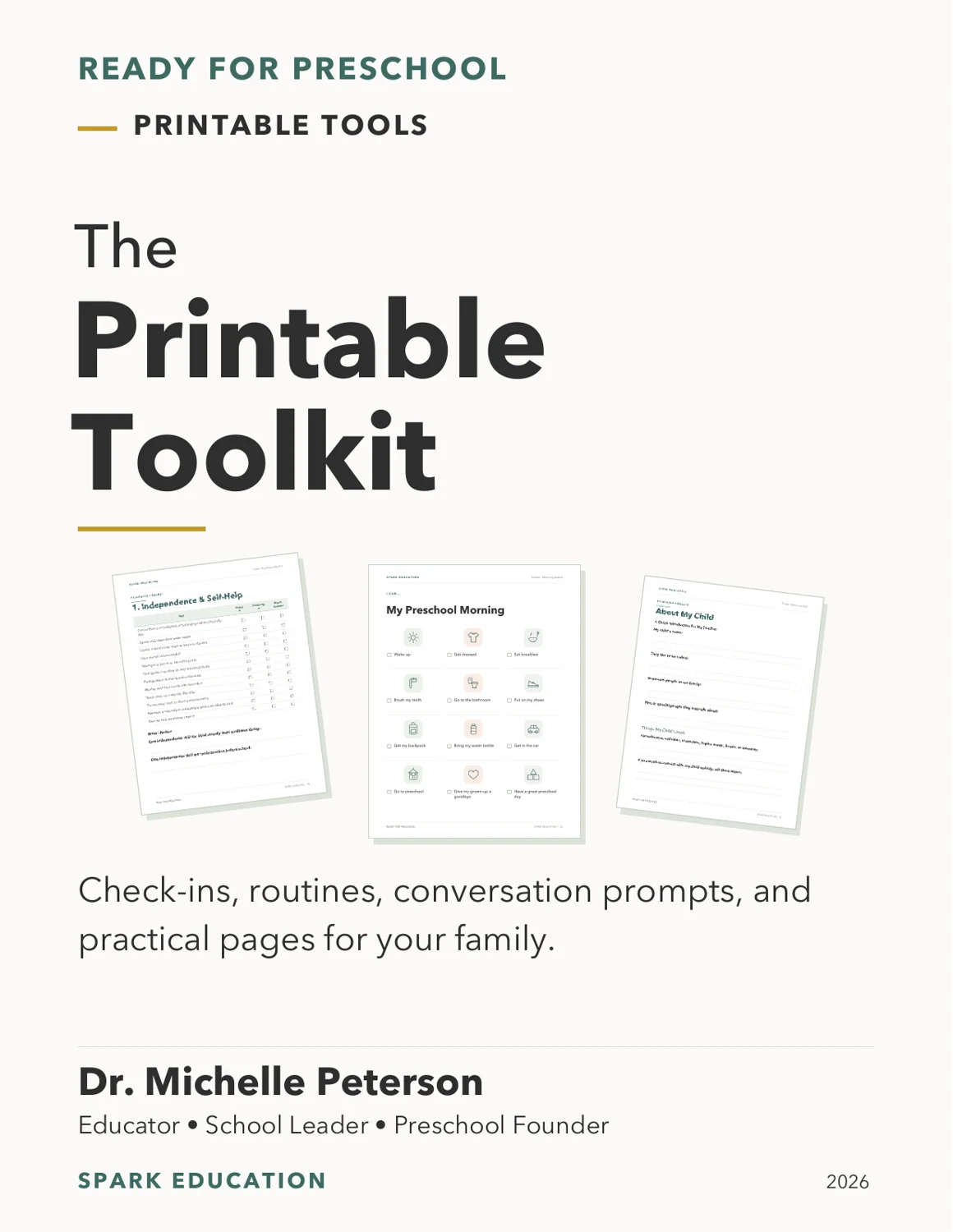
Ready for Preschool brings together Dr. Michelle Peterson’s illustrated parent guide and practical printables, with color and alternate print editions.

Explore the guide & printables

Readiness bundle $14.95. A free morning routine is available, too.

See all resources & free samples