Skip to content

Finding a comfortable beginning

Is my 3-year-old ready for preschool?

Look at everyday moments, ask about support, and get to know the classroom together.

Start with the child you know.

Readiness includes many skills that are still taking shape at three. Think about what your child enjoys, how they communicate and what helps them feel safe with someone new.

The signs below are conversation starters, not a pass-or-fail test.

Notice the skills taking shape.

Small moments at home, with a caregiver or at the playground can tell you a lot.

See the full readiness checklist →
01

Settling with a trusted adult

They can find comfort with another trusted adult after you leave.

What this can look like

Your child can spend a few hours with a trusted caregiver — a grandparent, a babysitter, a friend’s parent — without prolonged distress. Some initial clinginess is normal. What matters is whether they can settle.
02

Showing interest in children

They watch, approach or play alongside other children.

What this can look like

Your child watches other kids at the playground, wants to play alongside them, or talks about other children. They don’t need to be the life of the party — parallel play (playing next to, not with) is completely age-appropriate and a sign of social readiness.

03

Communicating their needs

They use words, phrases or gestures to let another adult know what they need.

What this can look like

Your child uses words, short phrases, or clear gestures to tell an adult when they’re hungry, need the bathroom, want help, or are upset. They don’t need perfect sentences — they need to be understood by someone who isn’t you.

04

Joining a simple routine

They are beginning to follow familiar steps with reminders.

What this can look like

Your child understands the flow of a day — breakfast, then get dressed, then shoes. They can follow simple one- or two-step directions with reminders. They don’t need to be compliant every time, but the concept of a routine isn’t foreign to them.

05

Following their curiosity

They explore books, materials and new ideas.

What this can look like

Your child asks “why?” about everything. They want to touch, explore, and investigate. They engage with books, art supplies, or building toys. This curiosity is the raw material that preschool turns into learning.

Talk through the support they need.

If separation, communication or joining other children feels difficult, share specific examples with the school. Ask how teachers would help your child settle and participate.

For concerns about development or speech, speak with your pediatrician. A classroom visit can inform your decision; it does not replace developmental advice.

Four questions to bring with you
  • What helps my child feel secure when I leave?
  • How do they show interest in other children?
  • How do they communicate hunger, discomfort or a need for help?
  • What support do they need with bathroom routines?

A practical note about potty training.

At Spark, children must be fully potty trained before their first day: using the bathroom independently, communicating when they need to go and managing clothing with minimal help.

If your child is still learning, talk with us about timing. Fresh 3’s has rolling enrollment when a child turns three, with no fall deadline to meet.

Picture a morning at Spark.

A visit gives you time to see the room, meet the teachers and talk about your child. Both age-three programs share the Purposeful Play Framework.

Fresh 3’s Fridays

Friday · 8:30–11:30 AM · $100/month

A complete preschool morning once a week, with rolling birthday enrollment and a class of no more than 12.

Explore Fresh 3’s Fridays →

3’s Preschool

Mon/Wed or Tue/Thu · 8:30–11:30 AM
$350/month

Two mornings for Academic Play, enrichment and the Developmental Playroom, with a 5:1 student-to-teacher ratio.

Explore 3’s Preschool →

Questions families ask.

Is 3 too young to start preschool?

Not necessarily. Three is the most common age to begin preschool, and most programs are designed for this age group. The question is not whether three is too young in general, but whether your child is showing the developmental signs that indicate they’ll benefit from a group learning environment. Age is one factor, but readiness is what matters.

Should I wait until my child is 4 instead?

Think about your child’s current skills, the support a program offers and your family’s routine. Some children start at three; others begin later. Talk with an early childhood educator about the options and what a comfortable transition could look like.

What if my child is ready in some ways but not others?

That describes almost every three-year-old. Readiness is a spectrum, not a switch. A child who communicates well but struggles with separation is still showing readiness — they just need a program that supports the transition. A child who is socially eager but behind in speech may thrive in a language-rich classroom. The right preschool meets your child where they are.

How many hours a week is typical for a 3-year-old’s first preschool?

Most three-year-old programs run two to three half-days per week, totaling six to nine hours. This is enough time for meaningful learning and socialization without overwhelming a child who is new to group settings. At Spark, the 3’s Preschool meets 8:30 to 11:30 AM on a Tuesday/Thursday or Monday/Wednesday schedule.

My child is very shy. Does that mean they’re not ready?

Shyness is a temperament, not a readiness deficit. A shy child who watches other children with interest, can communicate their needs, and can eventually settle into a new environment is showing readiness. What helps shy children most is a small class size, a consistent routine, and teachers who give them space to warm up. Spark’s 5:1 ratio and homelike environment are specifically designed for this.

What if my child’s speech is behind?

Speech development varies enormously at age three. If your child can communicate basic needs through a combination of words, gestures, and pointing — enough that an unfamiliar adult can understand them most of the time — they can likely participate in a preschool classroom. If speech delays are significant, talk with your pediatrician about early intervention services, which are available in Illinois. Spark Academy also welcomes outside speech therapists to work with children during the school day.

Can I try preschool and pull my child out if it’s not working?

Talk with the school before enrolling about the transition and any withdrawal, tuition or notice requirements. Fresh 3’s Fridays is a complete weekly preschool program. If your child is struggling after starting, discuss what support or changes may help with their teacher.

Meet the people who will welcome them.

Bring your questions. We’ll talk through a beginning that feels right for your family.

A little guidance for the first big step.

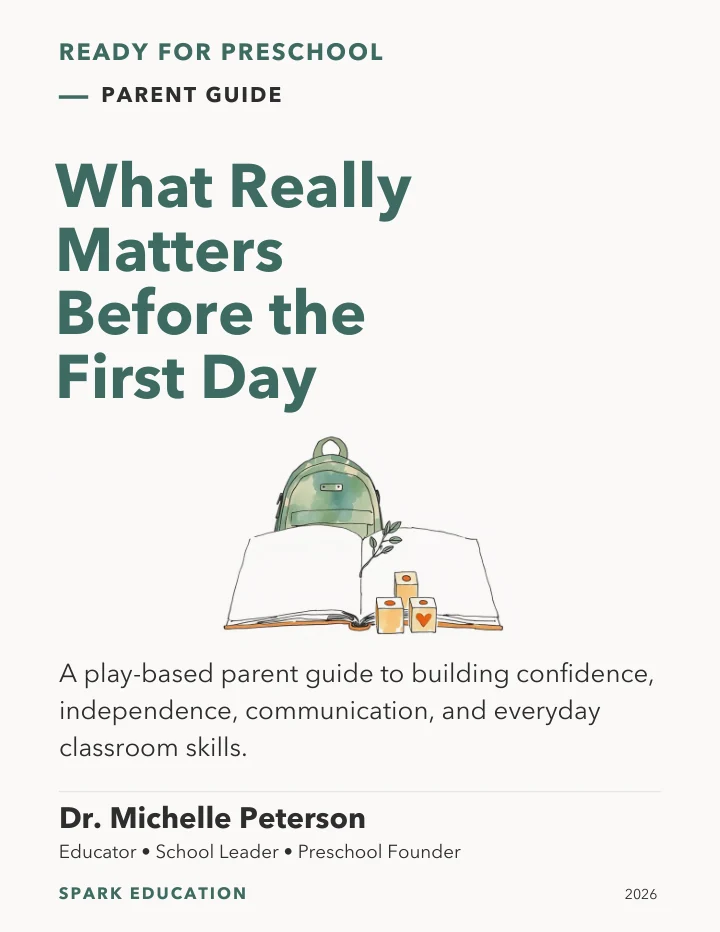
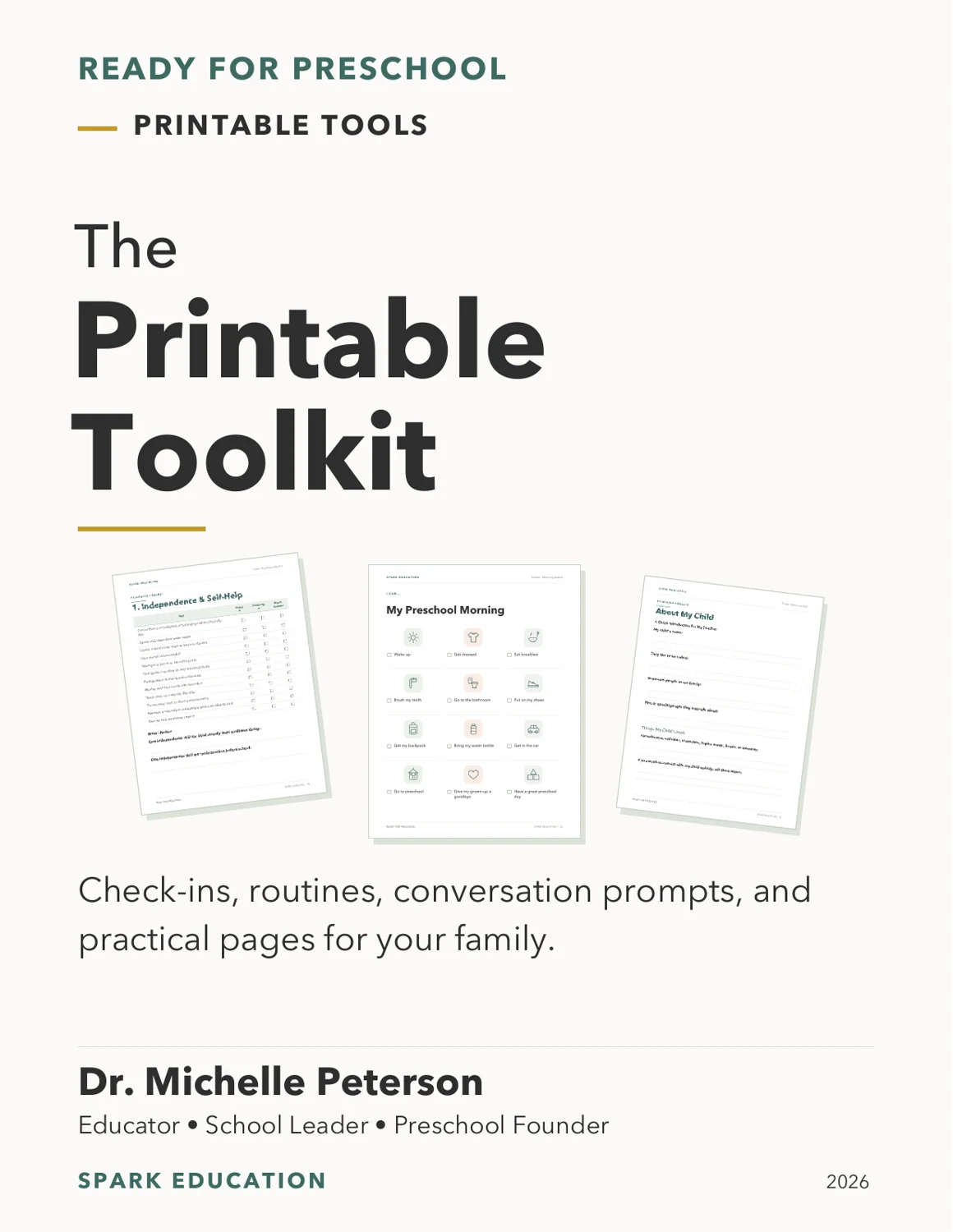
Ready for Preschool brings together Dr. Michelle Peterson’s illustrated parent guide and practical printables, with color and alternate print editions.

Explore the guide & printables

Readiness bundle $14.95. A free morning routine is available, too.

See all resources & free samples