The interesting part is the reason these socks belong together.
Gather
Four to six clean socks with noticeable differences in length, color, pattern, or texture.
Make a beginning
Spread the socks where every one can be seen. Begin with an easy contrast, such as two long socks and two short socks. Add more only if the collection invites interest.
Let the play unfold
Invite your child to put together any socks that seem to belong together. Wait to discover their rule. They may choose stripes, softness, a favorite color, or who wears them.
Place another sock nearby and wonder where it could go. A sock might fit more than one group. Let your child move it, create another group, or explain by showing.
When the first arrangement feels finished, ask permission to mix the socks. Try a new rule together. Notice which socks become neighbors and which move apart.
Wonder together
What made you put these together?
Where could this sock belong?
What other way could we arrange the same socks?
Why it matters, ways to join, and another day
Why this play matters
Grouping involves attending to a chosen feature while setting other features aside. Regrouping makes a useful idea visible: the objects can stay the same while the organizing rule changes. Your child’s explanation reveals more than whether a pair matches your expectation.
Something to notice
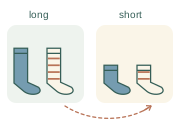
A striped sock moves from the “long” group to the “striped” group. Say, “The sock stayed the same. Your plan changed.”
Make room to join
Use just three socks and make one group together. If touching a texture is unwelcome, your child can direct your hands by pointing.
Another day
Create a pretend sock shop organized for a customer: warm socks, party socks, or socks for a giant. Discuss how the customer’s needs change the arrangement.
Care: Remove clips, pins, or tags with sharp fasteners. This is an exploration of categories, not a timed matching test. An adult supervises.
Follow an interest, not a calendar.
Some days begin with a story. Others with movement, making, or a question worth exploring.
Choose a starting point.
Browse the linked themes and pick an idea that fits your child and the materials nearby.
Leave room for their idea.
Offer the beginning, notice what catches their attention, and use a question when it helps.
Come back to a favorite.
Skip around, repeat, or let the plan change. There are no dates, deadlines, or required order.
More ways into the play.
Every invitation offers a beginning, three optional questions, and room for your child to lead.
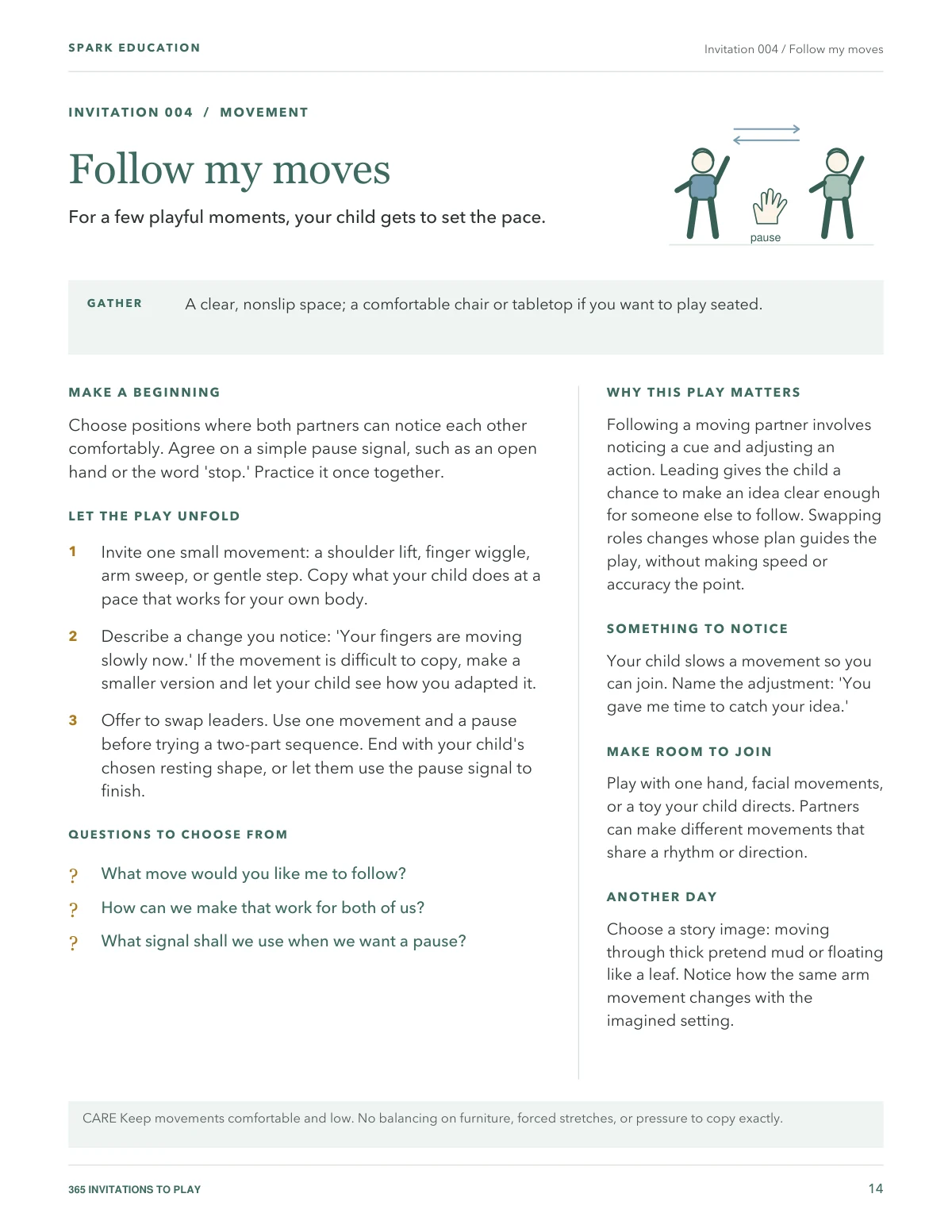
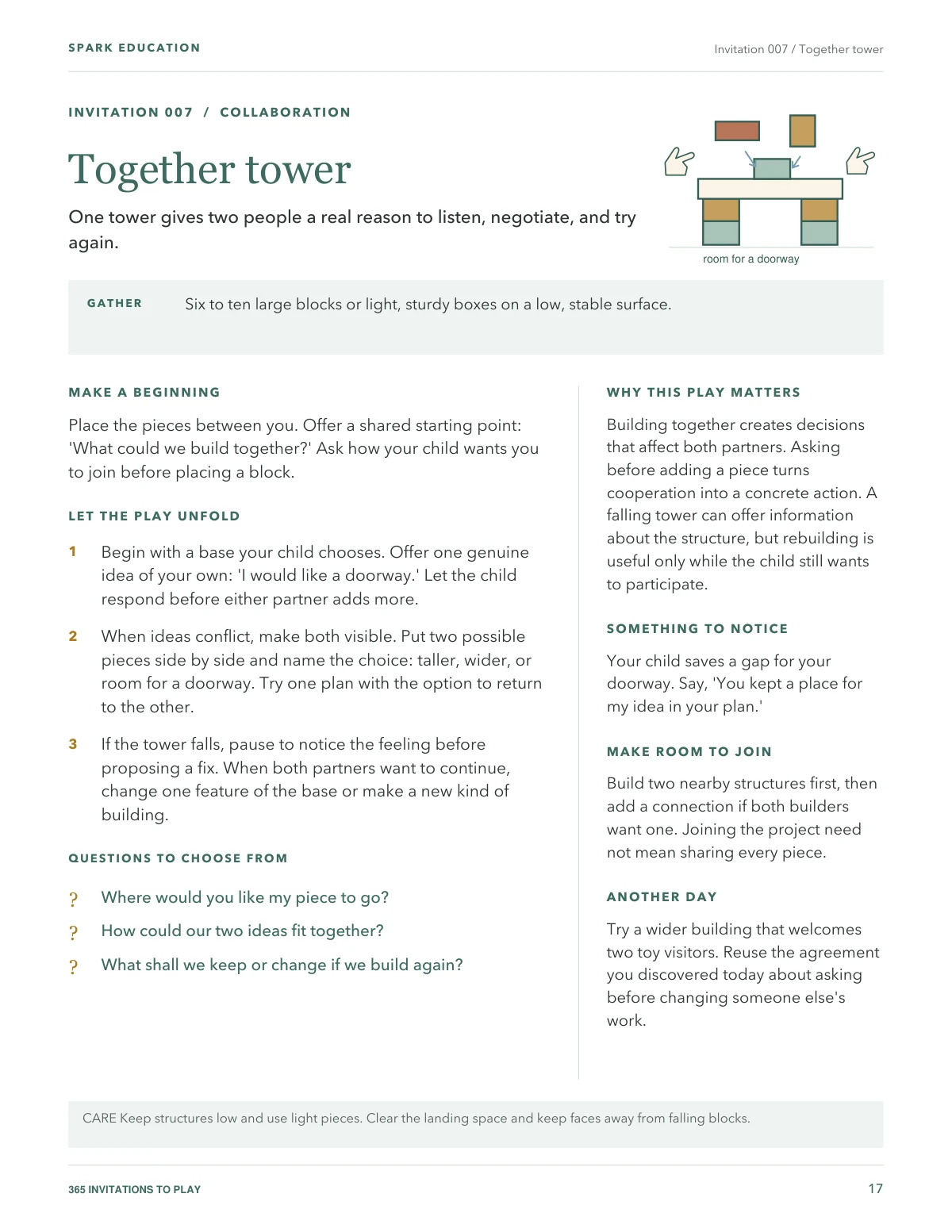
A story to make together. Two toys, a small surprise, and an ending your child invents.A chance to set the pace. Follow your child’s movement and find a way for both of you to join.Two ideas, one beginning. Build something that has room for both of your plans.
Dr. Michelle Peterson is an educator, researcher, educational leader, and preschool founder. Her resources bring classroom experience and research on peer engagement through play into everyday family life.
The play book is offered for ages 3–6, for families at home or an educator’s personal classroom. Choose and adapt materials for your child’s abilities, interests and comfort. An adult supervises every invitation.
Do we need to do one activity every day?
No. The 52 themes help you find an idea. Start anywhere, repeat favorites, and stop when your child is ready. The optional questions support a conversation; they are not a quiz.
What will I receive, and do I have to print it all?
Payhip handles checkout and digital delivery. The play book includes one 429-page US Letter PDF and a Read Me. Use its linked contents and bookmarks on screen, or print selected pages at actual size / 100%. There is no separate low-ink play edition and no physical book is shipped.
What is different about the collection?
The $24.95 collection includes this same play book, the 70-page Parent Guide in color and grayscale, and the 41-page Toolkit in color and low ink. It saves $8.90 compared with buying the three resources individually. If you already have the readiness bundle, buy the play book on its own to avoid duplicating resources.
Can I share the downloads?
The play book and Parent Guide are for one household or one educator’s personal classroom. Please do not redistribute their files or printed copies. The Toolkit has separate permission for private sharing with enrolled classroom families. Follow the terms included with each resource; a collection purchase does not extend them.
Is this a curriculum or developmental assessment?
These are flexible play invitations, not a required curriculum or assessment. They offer educational information and do not replace individualized medical, developmental, or therapeutic advice.