The Spark journal · Choosing a Program
Daycare vs. preschool: bring better questions.
Look closely at the day your child will experience, and the support your family needs around it.
A quick answer, with room for the details.
Preschool usually describes an early education program for children approaching kindergarten. Daycare often describes care arranged around a family's working day. But the names overlap: a child care center can offer a thoughtful preschool program, and preschool schedules vary.
The useful question is what your child will experience there. Who will welcome them? How will they play and learn? What happens when they need comfort, a challenge, or help joining a friend?
You also need a plan that works on an ordinary Tuesday. Hours, travel, school breaks and cost belong in the same conversation as learning. Needing a full day of care does not mean choosing between your child's development and your job.
Our daycare-versus-preschool overview explains how the options compare with Spark. This companion guide helps you turn visits into a decision, with questions to ask and a free sheet for recording the answers.
What the names can tell you.
ChildCare.gov describes prekindergarten programs as serving children ages 3–5 and preparing them for kindergarten. They often follow a school-year calendar and operate for part of the day. The federal guide also notes that child care centers can offer prekindergarten programs.
So start with the description, then ask for the daily schedule. A name alone will not tell you the hours, teaching approach, staff qualifications or support available to your child.
Compare the day, piece by piece.
Use the same questions for every program you visit. Specific examples make the answers easier to understand.
Who will know your child?
Ask who will be with your child regularly, how new children settle in, and how teachers respond to a difficult goodbye. Notice whether adults listen and help children feel included.
Ask: “What would you do if my child wanted to watch before joining an activity?”
What happens during play?
Ask how teachers choose activities, follow children's interests and notice progress. Look for conversation, exploration and chances to try an idea again.
Ask: “Can you describe something children explored this week, and how you supported it?”
How does staffing work?
Ask about both class size and the number of children per adult. Find out who covers breaks and absences, and what those arrangements mean during a busy arrival.
Ask: “Who helps when several children need an adult at once?”
How are skills supported?
Invite the teacher to talk through a disagreement over a toy or a child feeling overwhelmed. Listen for calm limits, help with feelings and a chance to practice what to do next.
Ask: “How would you help my child rejoin the group after a hard moment?”
How will you stay connected?
Ask when you can talk with the teacher, how progress is shared, and how your knowledge of your child shapes their experience. Discuss routines, language and support needs that matter to your family.
Ask: “How would we work together if something felt difficult for my child?”
What does the whole day hold?
Request a walk-through from arrival to departure: play, movement, meals, transitions and any rest time. Check how the rhythm changes for children who need a quieter moment.
Ask: “What choices can my child make during the day?”
NAEYC's family guide to a high-quality preschool describes caring relationships, intentional teaching, observation and family partnerships. These are useful areas to explore when you visit.
Learning can look like a block bridge.
Picture a child trying to build a bridge wide enough for a toy truck. The first version falls. Another child offers a longer block. An adult asks what they might change.
That small moment can hold planning, comparing, conversation and cooperation. It is an illustration of what purposeful play can look like, not a report about a particular classroom.
During a visit, ask how adults make room for this kind of exploration. A busy room is not automatically a rich learning environment, and a quiet table of worksheets is not the only way to see learning. Look at what children are trying, saying and discovering.
For more examples, explore the Purposeful Play Framework at Spark and our guide to play-based learning.
Put your family's full week on paper.
Write down when your child needs to be somewhere, including travel time. Then ask each program for its actual calendar: start and finish times, available days, holidays, summer arrangements and what happens if a session closes unexpectedly.
If you are considering a morning preschool plus care elsewhere, work through the handoff. Who will collect your child? Where will lunch and rest happen? What is the backup plan? A combination can suit a family well when those pieces are dependable; it also brings transitions and costs to consider.
Compare the total for the same period, rather than a monthly fee in isolation. Ask about deposits, supplies, meals, additional care, transport and charges during breaks. Two programs with different hours are offering different amounts of coverage.
Our programs guide lists Spark's current schedules and tuition so you can work from the actual options. Tax treatment is a separate question: our preschool tax-benefits article explains what to check for your circumstances.
Turn the answers into a next step.
After each visit, separate what you know from what you still need to ask. “They support children who find goodbyes difficult” is a helpful beginning. “The same teacher greets new children, helps them choose a familiar activity and agrees a check-in plan with parents” gives you something concrete to discuss for your child.
Do the same with the practical details. “Morning preschool could work” becomes a clearer plan when you have confirmed the finish time, who will collect your child, and where they will spend the afternoon. If a piece is missing, write it down as a follow-up rather than filling the gap with an assumption.
You do not need to turn your observations into a ranking. Notice which program can explain how it would support your child, which arrangements your family can sustain, and where you need another conversation.
Bring the same questions to every visit.
A little space to compare answers, notice what matters and plan your next step.
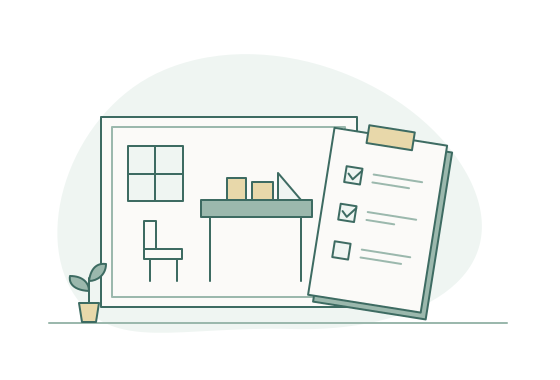
Our free two-page Preschool & Care Comparison Sheet has room for two programs, your observations, schedule and cost details, and follow-up questions. Use another copy if you visit more programs.
There is no score to pass. The sheet helps you see how the options fit your child and your family's week.
PDF · 2 pages · US Letter · No email required. Print at 100% or Actual Size.
Where Spark fits.
Spark Academy is a play-based preschool in Morton, founded and led by Dr. Michelle Peterson, Ed.D. Its core preschool programs offer morning learning experiences rather than full-day care.
Your child has opportunities for purposeful play, time in the Developmental Playroom, daily enrichment and growing friendships. Spark's 5:1 student-to-teacher ratio supports a small-group experience. You can explore 3's Preschool and 4's Preschool to compare the mornings available.
A visit gives you room to discuss your child and see the approach in person. Bring your comparison sheet and the questions you still have. Schedule a tour.
Support for the beginning you've chosen.
Once you are thinking about those first mornings, What Really Matters Before the First Day offers Dr. Michelle Peterson's practical guidance on routines, goodbyes, independence and the first week. It is a paid digital parent guide available through Payhip. You can see inside the guide and decide whether it would be useful for your family.
For a small step to try now, the free Morning Routine Sample offers a printable way to practice a familiar morning together.
A few common questions.
Can a daycare have a good preschool program?
Yes. Child care centers can offer preschool or prekindergarten education. Ask about the specific classroom, teachers and learning approach, along with the hours your family needs.
Does play-based preschool prepare children for kindergarten?
Purposeful play gives children opportunities to practice language, problem-solving, movement and getting along with others. Ask how teachers connect those experiences to learning goals and adapt support for your child. No program can guarantee a particular outcome.
Can we combine preschool with other care?
You can plan for both, provided the schedules, transportation and transitions work for your family. Confirm each arrangement directly; enrolling in Spark's core preschool programs does not include full-day care.
What should I ask about before enrolling?
Ask about learning, relationships, staffing, behavior support, communication, hours and total costs. Confirm age and bathroom-independence requirements with each program. Our guide to choosing a preschool offers more questions to bring to a visit.
Bring the ideas home.
Play ideas for today. Guidance for the first day ahead. Explore PDF books and printables from Dr. Michelle Peterson, for families everywhere.
365 Invitations to Play
Preschool guide & printables
Paid PDF downloads. Read on screen or print at home.