The Spark journal · Starting Preschool
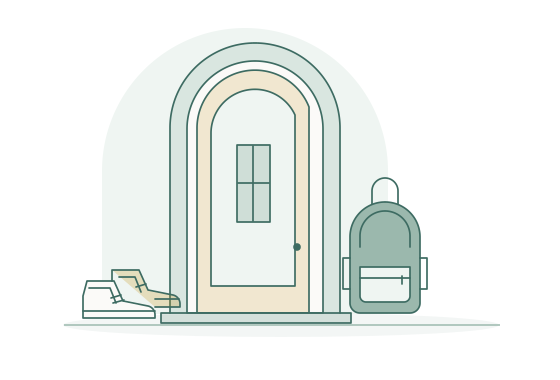
A familiar beginning for the first day of preschool.
A few small preparations can help your child picture the morning—and help you and their teacher support it together.
Start with what your child can picture.
A backpack beside the door. A teacher's name. Knowing who will be there when the morning ends. These are small details you can talk through together before preschool begins.
Give your child a simple version of the day: how you will get there, who will welcome them, and who will come back. Use the school's real routine, including an event your child can understand as a marker for going home. Check that marker with the teacher before promising it.
You might say, “We'll walk in together, put your bag away and say hello. Then you'll spend the morning with your teacher and the other children. I'll come back when your school morning is finished.” This is suggested language to adapt to your own plan.
Meet a little of the school in advance.
Ask whether you and your child can visit before their first day. Find out where to enter, where belongings go, and how the teacher welcomes new children. If your child has a question about the bathroom or where you will wait, bring it along.
NAEYC's tips for starting preschool recommend meeting the school and teacher, learning the bathroom routine, and gradually getting familiar with the school-day schedule. Choose one useful preparation at a time.
If you are still deciding when to start, our age-and-readiness guide can help you discuss the options. This article focuses on the next step: preparing for the beginning you have chosen.
Practice the little moments.
A short, playful rehearsal gives your child something familiar to return to.
1. Try the morning once.
Walk through the parts that will happen at home: getting dressed, eating breakfast, using the bathroom and finding the bag. Leave room for your child to try a step and ask for help.
Use what you already have. A familiar bag and comfortable clothes can be part of the practice.
2. Let a toy take a turn.
A stuffed animal can arrive, put a bag away, say goodbye and come home again. Let your child decide what the toy wants to explore or ask about.
If they lose interest, move on. There is no need to rehearse the whole morning.
ZERO TO THREE's preschool-preparation guide suggests low-key pretend play, practice with everyday tasks and listening to children's questions. Books about starting school can offer another way to talk together.
Agree on the goodbye before you reach the door.
Ask the teacher what arrival looks like and how they support a child who is finding the separation hard. Decide together who will welcome your child, how you will say goodbye, and how the school will let you know if more support is needed.
Choose a small ritual you can repeat: a hug, a familiar phrase, a wave. Tell your child when you are leaving rather than slipping away unnoticed. Follow the arrival plan you have agreed with the teacher.
For example: “One hug, then I'll say goodbye. Your teacher will help you get started. I'll see you when your school morning is finished.” Use words you can say warmly and keep the return plan accurate.
NAEYC's guidance on saying goodbye emphasizes a predictable routine, a relationship with the welcoming adult and space for children's feelings. A familiar object or family photo may help some children; check what the school permits first.
If your child is upset, acknowledge what you see: “You want me to stay. This feels new.” Let the teacher help with the next step. A tearful goodbye gives you something to discuss together; it does not tell you everything about the rest of the morning.
Share the details that make support personal.
Before the first busy arrival, tell the teacher about a favorite kind of play, words your family uses for everyday needs, and what tends to help your child feel comfortable. Ask how to share practical information privately and when there will be time for a longer conversation.
Try a specific question: “When my child needs a little time to watch before joining in, how can we help them get started?” The answer can become part of your shared plan.
Confirm the school's packing list and bathroom expectations. At Spark, children must be fully potty trained before starting a core program. Discuss any questions with the school in advance so the first morning begins with a clear understanding.
A small plan to make together.
Keep the welcome, goodbye and reunion in one place.
Our free First-Week Preschool Plan has space for your arrival routine, goodbye words, return plan, something that helps your child settle, and a question to discuss with the teacher.
Fill in what you know. Leave the rest for a conversation. It is a planning sheet, not a test of your child's readiness.
Download the free first-week plan
PDF · 1 page · US Letter · No email required. Print at Actual Size or 100%.
Leave room for the afternoon, too.
Plan who will collect your child and make sure the school has the correct arrangements. Afterward, offer a familiar way to reconnect. You can leave a detailed conversation about the day until your child wants to talk.
Instead of asking for a complete report, try one small invitation: “Show me something you tried,” or “Was there something you'd like to do again?” A child who has little to say may tell you more later through play or a passing comment.
Ask the teacher for something concrete: what your child joined, what helped them settle, and whether there is one useful adjustment for next time. Keep a simple note so the plan can change with what you learn.
Make the next conversation specific.
If arrival remains difficult, ask what happens after you leave and how your child participates through the morning. Discuss what the adults can try together and when you will check in again. There is no universal number of days by which every child should feel settled.
If you are concerned about your child's development or wellbeing, talk with their pediatrician as well as their teacher. This general preparation guide cannot assess an individual child's needs.
A little more support for your family.
What Really Matters Before the First Day, by Dr. Michelle Peterson, offers practical guidance on goodbyes, independence, communication, routines and the first week. It is a paid digital parent guide available through Payhip. See inside and choose it if your family would find that fuller guidance useful.
For a free way to practice the start of the day, try the Morning Routine Sample. It is separate from the free planning sheet above and the paid full guide.
Picture a morning at Spark.
Spark Academy is a play-based preschool in Morton, founded and led by Dr. Michelle Peterson, Ed.D. Explore 3's Preschool or 4's Preschool to compare the school mornings available for your child.
Bring your first-week questions to a visit. Schedule a tour to meet the teachers and explore the classrooms together.
A few first-day questions.
What should my child bring?
Use your school's current list and label belongings as requested. Check clothing, bathroom supplies, food and comfort-item policies directly; requirements differ. Let your child practice opening and closing anything they will use.
Should we practice academic skills first?
Focus first on the everyday experience: communicating a need, trying the morning routine and getting to know the teacher. Keep reading, conversation and play part of your time together. Ask the school about its actual entry requirements rather than creating your own test.
Can I stay for the first morning?
Ask the school about its settling-in and visiting arrangements before the first day. Agree on a plan with the teacher so your child hears a consistent explanation of what will happen.
Does this help with a midyear start?
Yes—the same planning questions are useful whenever a child joins a new school. Ask how the teacher introduces a new child to the group's existing routines. Confirm the start date and program availability directly.
Bring the ideas home.
Play ideas for today. Guidance for the first day ahead. Explore PDF books and printables from Dr. Michelle Peterson, for families everywhere.
365 Invitations to Play
Preschool guide & printables
Paid PDF downloads. Read on screen or print at home.